Sorso / Ottawa, Ontario

Water filtration
in Ottawa.
Made personal.

From a city kitchen to a rural well, better water choices begin with the place you call home. Explore water filtration and treatment around your source, your plumbing and your everyday priorities.

City water · Communal wells · Private wells
Filling a glass at a Sorso kitchen faucet
Thoughtfully chosen. Used every day.

01 / Start at the source

One city.
Different water stories.

An Ottawa address does not tell the whole story. First establish whether your home receives the central municipal supply, a City-operated communal well supply, or water from its own well.

River-supplied city water

The central system draws from the Ottawa River, with treatment at Britannia and Lemieux Island. Chloramine helps maintain disinfection through the network. If your goal is taste or a different drinking-water experience, start with that goal—not an assumption that your supply is unsafe.

How Ottawa treats its water ↗

City-operated well water

Six communal groundwater systems serve defined communities and subdivisions. They receive City treatment and monitoring. Their hardness is higher than the central river supply, so measured scale concerns may be a reason to discuss softening.

Find the six well systems ↓

Your own private well

A private well needs a property-specific approach. Testing, the well’s condition, pump capacity and existing equipment all matter. A neighbour’s system—or a community name—is not enough information to choose yours.

Explore private-well treatment ↗

Not sure which supply you have? Check your water bill, well documents or City connection records. Central municipal service also extends to parts of Manotick and Carlsbad Springs; a rural address does not necessarily mean a private well. See the City’s infrastructure plan.

02 / Beyond the central supply

Well water.
Know your community.

Ottawa’s central supply is very soft: approximately 30 mg/L total hardness. The City’s communal well reference values are higher. Your treatment decision should reflect your actual supply and household measurements.

Six City-operated groundwater systems
Community / systemReference hardness
CarpCity well system200 mg/L
Munster HamletMunster well system285 mg/L
Kings ParkRichmond subdivision350 mg/L
Richmond WestSeparate from Kings Park285 mg/L
Shadow RidgeGreely subdivision350 mg/L
VarsCity well system200 mg/L

Source: City of Ottawa water-quality FAQ. General reference values, not a test of your home’s water. The City chlorinates communal well supplies; Vars also has greensand and activated-carbon treatment.

Private-well areas to consider

Rural west

Dunrobin, Constance Bay, Fitzroy Harbour and Kinburn.

Rural south

Metcalfe, Osgoode, North Gower, Kars and Vernon, plus private-well properties in Greely and around Manotick and Richmond.

Rural east

Navan, Sarsfield and rural Cumberland.

The City’s groundwater-study inventory identifies private-well relevance in these areas. It does not mean every property uses a well or has the same water chemistry.

Small boundaries make a real difference. Shadow Ridge is a communal system within Greely. Kings Park and Richmond West are separate systems. Private wells exist elsewhere in these communities. Confirm the address before choosing equipment.

Start with testing, not a bundle. A bacterial result does not measure every chemical concern. Use Ottawa Public Health’s well-testing guidance and arrange separate laboratory analysis where needed. Do not assume that iron, sulphur or another issue affects an entire village.

03 / A closer look at older homes

Beautiful old homes.
Know the pipes, too.

Lead can enter drinking water through service pipes or household plumbing. A neighbourhood’s age is a reason to investigate, not proof of lead at your tap. Check the public and private sections of your connection.

Pre-1958

An important screening point in Ottawa’s lead-testing guidance. Some newer homes connected to older infrastructure can also warrant a check.

Centretown

The City’s 2023 MacLaren–Lyon renewal presentation anticipated lead services on MacLaren, from Bronson to Kent, and Lyon, from Somerset to Florence. It distinguished City work from private-side replacement. Those project records do not show which pipes remain today.

Read the City’s project evidence ↗

The Glebe

The Pretoria Avenue renewal project, between Bank and Metcalfe, advises owners of pre-1958 homes about possible private lead services. Use that guidance to check your property’s history; it is not a statement that every Glebe home has lead pipes.

Read the Pretoria Avenue guidance ↗

Old Ottawa South

Historical City records include lead-service work in the Colonel By side-street renewal area. The Sunnyside Avenue consultation also asked about previous lead-connection replacements. These are reasons to check records, not estimates of present-day pipe materials.

See the Sunnyside consultation ↗ · City budget, page 105 ↗

Sandy Hill

The Russell Avenue–Range Road heritage area includes older housing where original service materials are worth checking. This is an inference from building age, not a confirmed inventory of remaining lead lines.

See the heritage-area history ↗

Check your connection

Ask about pipe records and City water testing. Confirm both sides of the property line, even after street renewal.

Choose verified reduction

The City recommends a filter specifically certified to NSF/ANSI 53 for lead reduction. Boiling does not remove lead.

Plan beyond the filter

Filtration does not replace pipe replacement. Ask the City about its filter-kit programme while awaiting replacement.

04 / Choose with purpose

The right system.
For the right reason.

Start with the improvement you want. Then compare the relevant model’s performance, installation needs and upkeep. A drinking-water filter and a whole-home softener do different jobs.

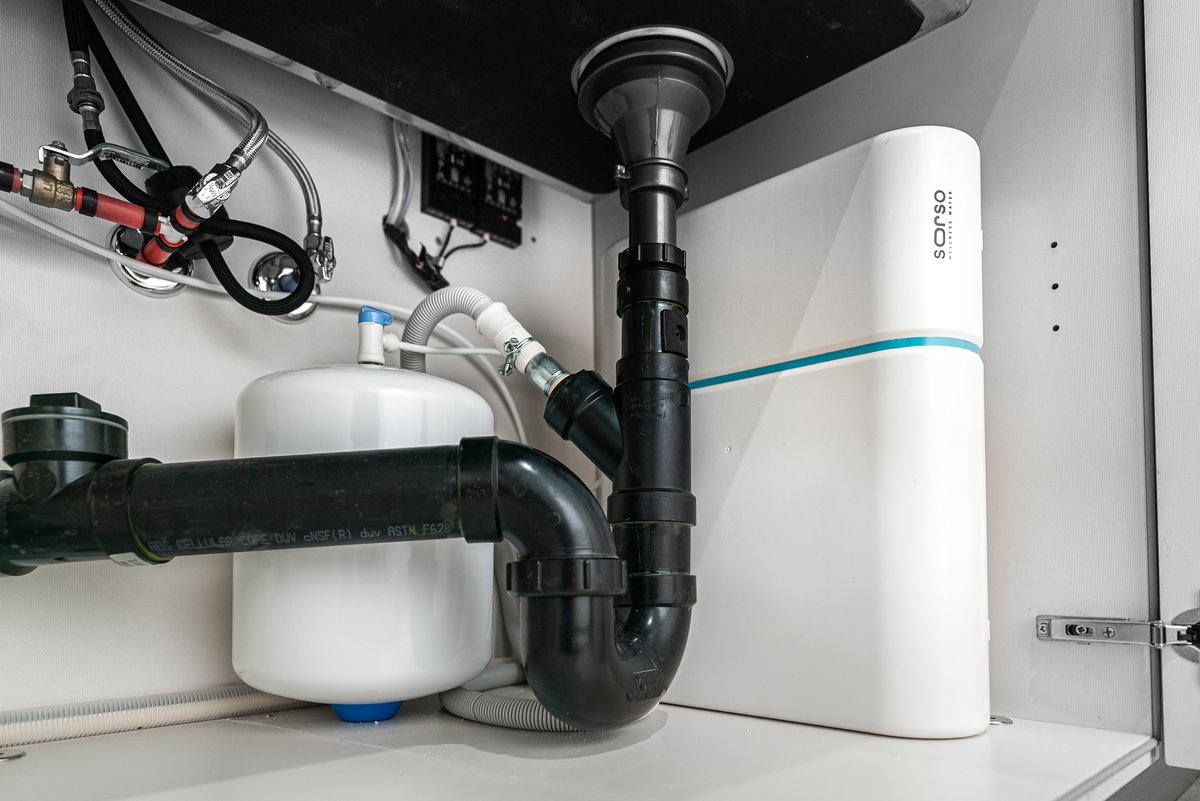
Sorso Premio system installed beneath a kitchen sink
A Sorso under-sink installation. Layout and equipment depend on the property.

Drinking water, considered

If taste is your priority, compare point-of-use filtration for your kitchen. Discuss available cabinet space, faucet choices, flow and replacement cartridges. For a specific contaminant, request the exact model’s certified reduction claim and operating limits.

Explore drinking-water systems ↗

Reverse osmosis in Ottawa

Considering RO? Compare documented performance, water use, storage or tankless layout, and ongoing filter costs. Do not assume every model reduces the same substances. The right option depends on the incoming water and the result you need.

Understand reverse osmosis ↗

Whole-home treatment & softening

For a concern across several taps, discuss point-of-entry equipment, peak household flow and maintenance access. Softening should follow measured hardness. Ottawa’s very soft central supply is a different starting point from a harder communal well or private well.

Explore whole-home options ↗

A plan for your private well

Bring the test results before choosing treatment. Review pump performance, current equipment and the specific findings with the installer. Ask how the proposed system will be maintained and how its performance will be checked after installation.

Start with well-water guidance ↗

05 / A little more clarity

Ottawa water.
Your questions.

Practical answers for city kitchens, rural properties and older homes.

Do Ottawa homes need a water softener?

Not automatically. Ottawa’s central river-supplied system is very soft, at approximately 30 mg/L total hardness in the City’s reference table. Communal groundwater systems are harder, while private wells vary by property. Establish your source and measure hardness before buying a softener. If your concern is drinking-water taste, discuss filtration separately from softening rather than assuming one system addresses both.

Is Carp’s municipal well water the same as a private well?

No. The Carp well system is a City-operated groundwater supply with treatment and monitoring. A private well is associated with an individual property, where the owner needs to arrange appropriate testing and upkeep. An address near Carp may fall outside the communal service area. Check the actual connection rather than relying on the postal community alone.

Are all Greely or Richmond homes on the same water supply?

No. Shadow Ridge in Greely has a communal well system. Richmond includes the Kings Park and Richmond West systems, as well as private-well properties. These names are useful starting points, but they do not classify every home. Bring a recent water bill, existing well information or City connection records so that your assessment starts with the correct source.

Which older Ottawa neighbourhoods should check for lead service pipes?

Pre-1958 properties in Centretown, the Glebe, Old Ottawa South and Sandy Hill are useful places to start checking service-pipe history. City renewal records provide specific examples for the first three; Sandy Hill’s heritage housing supports age-based screening. None of these neighbourhood names confirms a lead pipe at an individual address. Ask the City about records and testing, and check the private portion of the connection.

Does replacing the City’s pipe remove every possible lead source?

A public-side replacement does not establish what remains between the property line and your home. Interior plumbing and fixtures also need consideration. Confirm which sections were replaced, keep the records and follow the City’s advice on testing. Filtration may be an interim measure when appropriate, but it does not replace the work needed to remove a lead service pipe.

Will boiling water or an ordinary filter remove lead?

Boiling does not remove lead and can increase its concentration as water evaporates. Do not assume that an ordinary taste filter removes lead either. The City recommends a filter specifically certified to NSF/ANSI 53 for lead reduction, used and maintained according to its instructions. Check the exact model and replacement cartridge. Eligible residents can also ask the City about its filter-kit programme while awaiting pipe replacement.

What testing should come before private-well treatment?

Start with appropriate bacteriological testing through the public-health route and discuss separate chemical testing with a licensed laboratory. A bacteria result does not establish hardness, iron or every other chemical parameter. Share existing reports, any change in colour or odour, and details of your pump and current equipment. If there is a drinking-water advisory or a suspected safety issue, follow public-health guidance before arranging an equipment purchase.

Can Sorso help with my Ottawa-area property?

Contact Sorso with your community, postal code, water source and the concern you want to address. We can discuss the next step and confirm assessment and installation availability for your address. If you have test results or service-pipe records, mention them when you enquire. Ask about any visit or laboratory fees and the maintenance requirements of the options being considered before booking.

A thoughtful next step

Let’s start with
your water.

Tell us where you live and what you would like to improve. We’ll discuss the next step and confirm assessment and installation availability for your address. A treatment consultation is separate from laboratory testing.

A few helpful details

  • Your community and postal code
  • City supply, communal well or private well
  • Your concern and any test results
  • Property age and existing treatment

Before booking, ask about availability, any visit or testing fees, and the maintenance costs of the options you are considering.

chatsimple