


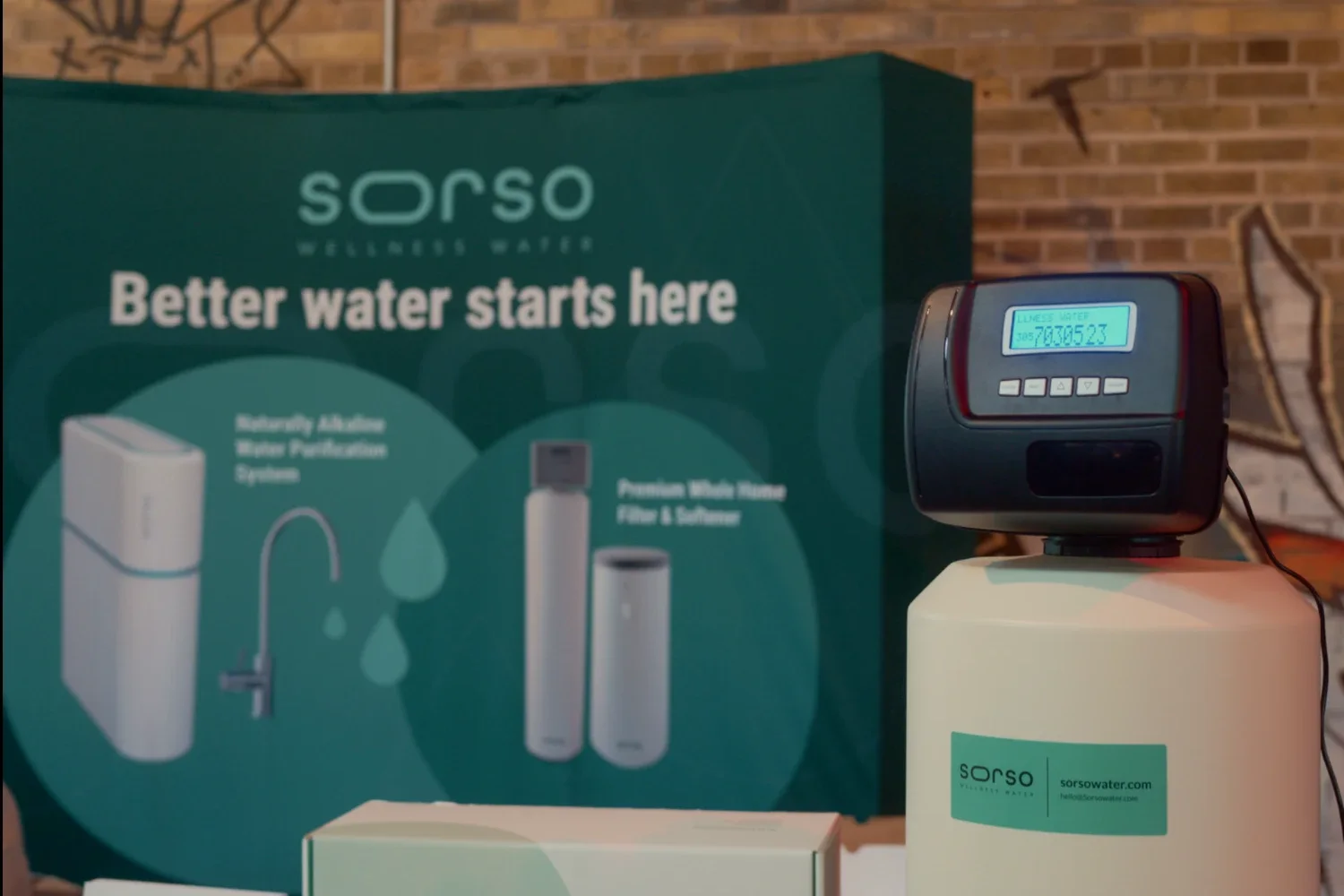
The difference sits inside the tank and on top of it: the grade of resin, the type of valve, and whether the size matches your home. These are the three questions worth asking before you buy.
The short answer: the best water softener uses 10% cross-link resin, a metered valve, and a grain capacity sized to your water and your home. Here is what each one means, and what to look for.
Water softener resin: why 10% cross-link beats 8%
The resin is the heart of a softener. Its small beads pull calcium and magnesium out of your water and hold on to them. When the beads are full, the system regenerates: it backwashes and rinses them with brine so they can start again.
Resin comes in grades, described by its cross-link: how tightly each bead is bound together. The two you will see are 8% and 10%.
| 10% cross-link | 8% cross-link | |
|---|---|---|
| The bead | Denser and tougher | The standard grade |
| Calcium it can absorb | More before it needs to regenerate | Less, so it regenerates sooner |
| Used by Sorso | Yes | No |
Sorso uses 10% cross-link resin. The reason is simple: it can absorb more calcium before it needs to regenerate. More softening between cycles means fewer cycles, less salt, and less water sent down the drain.
“Is the resin 8% or 10% cross-link?”
Metered vs. time clock valves: which one wastes less water
The valve is the brain. It decides when the softener regenerates, and that decision shows up on your water bill. Every regeneration uses about 15 gallons of water. So the question is how often that happens.
Time clock valves
A time clock regenerates on a schedule, whether your family used a lot of water or almost none. Away for a two-week vacation? It still regenerates.
Every 3 days = about 120 regenerations a year
120 × 15 gallons = about 1,800 gallons
Used on a calendar, not on need.Metered valves
A metered valve measures the water your home actually uses and regenerates only when the resin is close to full. In a typical home that is every 1,500 to 2,000 gallons, depending on:
- the size of your family
- the size of your home
- your water quality (how hard it is)
Sorso uses metered valves. You regenerate when your water calls for it, not when the calendar does. Less wasted water, less wasted salt, and soft water that stays consistent through busy weeks and quiet ones.
“Is the valve metered or time clock?”
Not sure what is in your basement now? Tell us what you have and we will tell you how it compares.
Get in touchWater softener sizing: grain capacity that fits your home
A softener’s size is measured in grain capacity: how much hardness it can remove before it regenerates. The tank size and the amount of resin inside set that number.
| Tank size | Grain capacity | Resin |
|---|---|---|
| 9 x 48 | 30,000 grain | 1 cu ft |
| 10 x 54 | 45,000 grain | 1.5 cu ft |
| 12 x 52 | 60,000 grain | 2 cu ft |
Three things decide which size is right:
- How hard your water is. Harder water fills the resin faster. Not sure? Check your local water quality report.
- How many people live in the home. More showers, laundry and dishes mean more water through the system.
- The size of the home. More bathrooms and fixtures mean more demand.
Too small, and the softener regenerates constantly and can let hard water through on busy days. Sized correctly, it works quietly in the background and regenerates on a steady, efficient rhythm.
“What grain capacity is this, and how did you size it for my water and my home?”
Which size fits your home? The honest answer starts with a water test, not a guess. Ours is free.
Book a free water testDo salt-free water softeners work?
You will also see “salt-free” or “salt-less” softeners. It is worth knowing what they actually do.
A salt-free system is a conditioner, not a softener. It changes how calcium and magnesium behave so they are less likely to stick to surfaces, but it does not remove them.
The hardness is still in your water
Softer skin and hair, no spots on glass and fixtures, less soap: those come from removing hardness. Only a salt-based softener with resin does that.
If what you want is truly soft water, choose a softener. A conditioner leaves the hardness in. Know which one you are buying.

How to choose a water softener: the short version
The best water softener is not the biggest or the most expensive. It is the one built right inside:
- 10% cross-link resin, so it absorbs more calcium between cycles.
- A metered valve, so it regenerates on your real usage, not a timer.
- The right grain capacity, sized to your water and your home.
Resin, valve, size. Ask all three before you buy. That is exactly how Sorso builds its softeners.
See how it comes together in a Sorso whole-home water system. Live in South Florida? See how hard South Florida water is.
Not sure how hard your water is or which size fits your home? Book a free water test. We will test your water, look at your home and family, and recommend the size that fits. No pressure, just the right answer.
Book a free water test
 Manufacturer direct pricing